Petley Grain · A World of Gluten-Free Pancakes · Ben Petley
Moroccan Baghrir
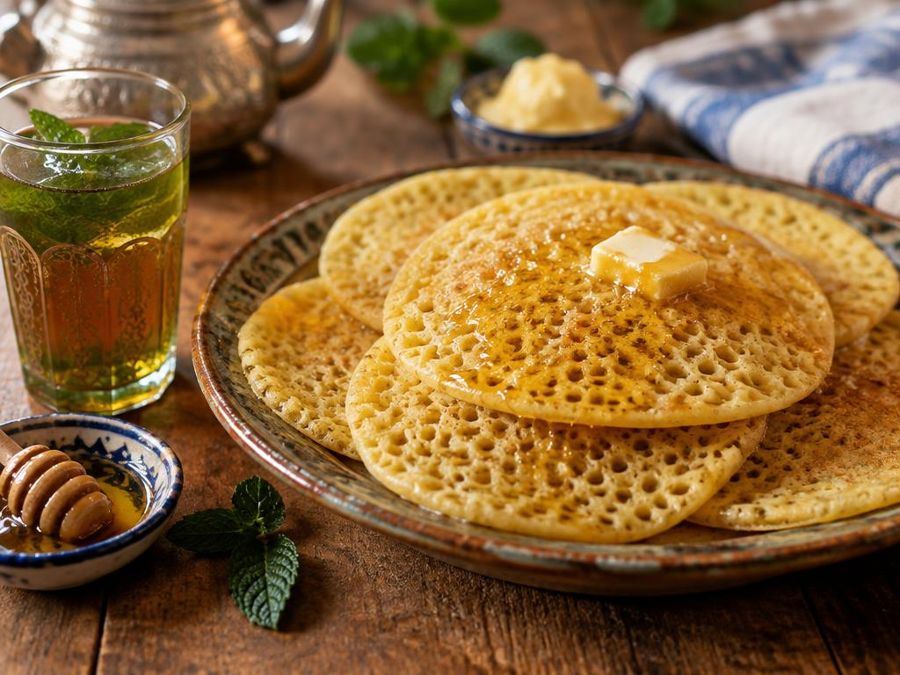
Morocco · The thousand-hole pancake
Prep 10 min (+15 min rest) · Cook 10 min
Ingredients
- 1 cup (125 g) Petley Grain Gluten-Free Pancake Mix
- 1¼ cups (300 ml) warm water
- 1 tsp instant yeast
- 1 tsp sugar
- ½ tsp baking powder
- Warm honey and melted butter, for serving
At the table
- Warm honey-butter syrup and mint tea
Method
- Combine the Petley Grain Mix, warm water, yeast, sugar, and baking powder in a blender. Blend on high for 1 minute until completely smooth and frothy.
- Let the batter rest, covered, at room temperature for 15 minutes until small bubbles cover the surface.
- Heat a clean non-stick skillet over medium-low heat. Do not oil the pan — oil prevents the holes from forming.
- Ladle ¼ cup (60 ml) batter into the center. Cook on one side only for 2–3 minutes without flipping, until hundreds of tiny holes pop open and the surface turns dry and sponge-like.
- Transfer to a clean towel — do not stack hot baghrir or they will stick. Drizzle generously with warm melted butter and honey.
Cook’s notes
- No oil in the pan: a dry, clean pan is the secret to a full field of holes.
- Watch the surface: the pancake is done when the top looks dry, not when the bottom browns.