Petley Grain · A World of Gluten-Free Pancakes · Ben Petley
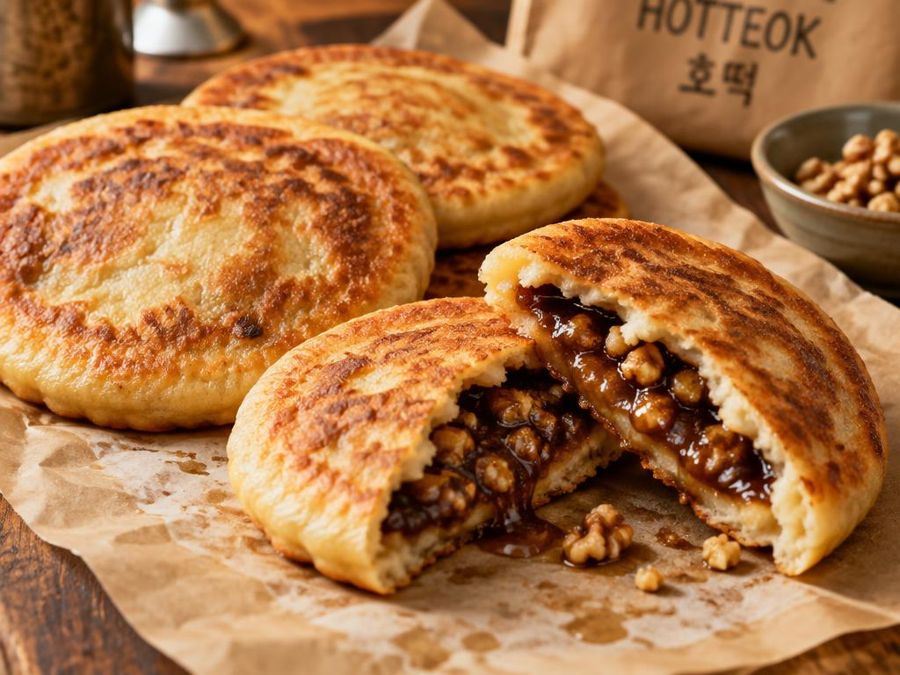
Korean Hotteok
South Korea · A warm pocket of cinnamon sugar
Prep 10 min · Rest 20 min · Cook 10 min
Ingredients
- 1 cup (125 g) Petley Grain Gluten-Free Pancake Mix
- ⅓ cup (80 ml) warm milk
- 1 tsp (3 g) instant yeast
- 1 tbsp (15 ml) neutral oil, plus more for frying
- Filling: 3 tbsp (40 g) brown sugar
- ½ tsp ground cinnamon
- 1 tbsp chopped walnuts or peanuts
At the table
- Eat hot, wrapped in a paper cup like street vendors
- Toasted seeds mixed into the filling
- Caffeine-free herbal tea or a cinnamon-ginger drink
Method
- Dissolve the yeast in the warm milk, then stir into the mix and oil to form a soft, pliable dough.
- Cover and rest for 20 minutes.
- Mix the filling ingredients in a small bowl.
- Divide the dough into 4 balls. Flatten each in your oiled hand, add 1 tablespoon of filling, and pinch tightly to seal.
- Fry in plenty of oil over medium heat, seam-side down. After 1 minute, press flat with a spatula. Cook until golden and crisp on both sides, 2–3 minutes per side.
Cook’s notes
- Oil your hands so the dough doesn't stick while sealing.
- Seal well: any gap lets the sugar leak out and burn.
- Savory version: fill with cheese and chopped scallions.