Petley Grain · A World of Gluten-Free Pancakes · Ben Petley
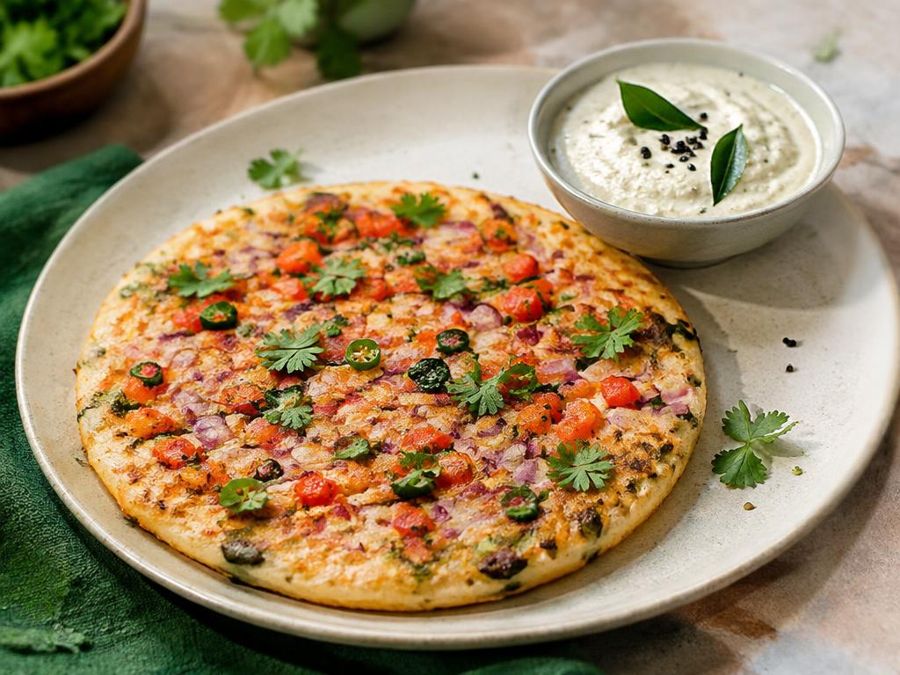
Indian Uttapam-Style Pancakes
India · Inspired by South Indian breakfast traditions
Prep 10 min · Cook 10 min
Ingredients
- Batter: 1 cup (125 g) Petley Grain Gluten-Free Pancake Mix
- ¾ cup (180 g) plain Greek yogurt or coconut yogurt
- ⅓ cup (80 ml) water
- ½ tsp salt
- ¼ tsp turmeric powder
- Topping: ½ cup finely diced red onion
- ½ cup finely diced plum tomato
- 1 serrano or green chili, finely minced
- ¼ cup chopped fresh cilantro
- Ghee or coconut oil, for frying
At the table
- Coconut chutney and sambar
- Sweet milky chai
Method
- Whisk the Petley Grain Mix, yogurt, water, salt, and turmeric into a thick, smooth batter.
- Mix the red onion, tomato, chili, and cilantro together in a small bowl.
- Heat 1 tbsp ghee in a non-stick pan over medium heat. Pour in ⅓ cup (80 ml) batter, spreading gently with the back of a spoon into a thick round.
- Immediately press a handful of the vegetable mixture firmly into the wet top of the batter.
- Cook 3 minutes, drizzle oil around the edges, flip carefully, and cook 2–3 minutes more, pressing down gently to sear the vegetables. Serve warm with coconut chutney.
Cook’s notes
- Press the vegetables in: they must stick to the wet batter before the flip.
- Thick, not thin: uttapam should be pillowy inside — resist spreading it like a crêpe.