Petley Grain · A World of Gluten-Free Pancakes · Ben Petley
Greek Tiganites
Greece · With honey and walnuts
Prep 5 min · Cook 8 min
Ingredients
- 1 cup (125 g) Petley Grain Gluten-Free Pancake Mix
- ¾ cup (180 ml) cold water
- 1 tbsp (15 ml) olive oil
- Olive oil or vegetable oil, for shallow frying
- Topping: ⅓ cup (110 g) Greek honey
- ⅓ cup (40 g) chopped toasted walnuts
- ½ tsp ground cinnamon
At the table
- Greek coffee or mountain tea
- Thick Greek yogurt on the side
- Fresh figs or orange slices
Method
- Whisk the Petley Grain Mix, cold water, and 1 tbsp olive oil together until smooth.
- Heat ¼ inch (6 mm) of olive oil in a wide skillet over medium-high heat until shimmering.
- Drop spoonfuls (2 tbsp) of batter into the hot oil. Fry 2 minutes per side until puffed, crispy, and deeply golden.
- Drain briefly on paper towels.
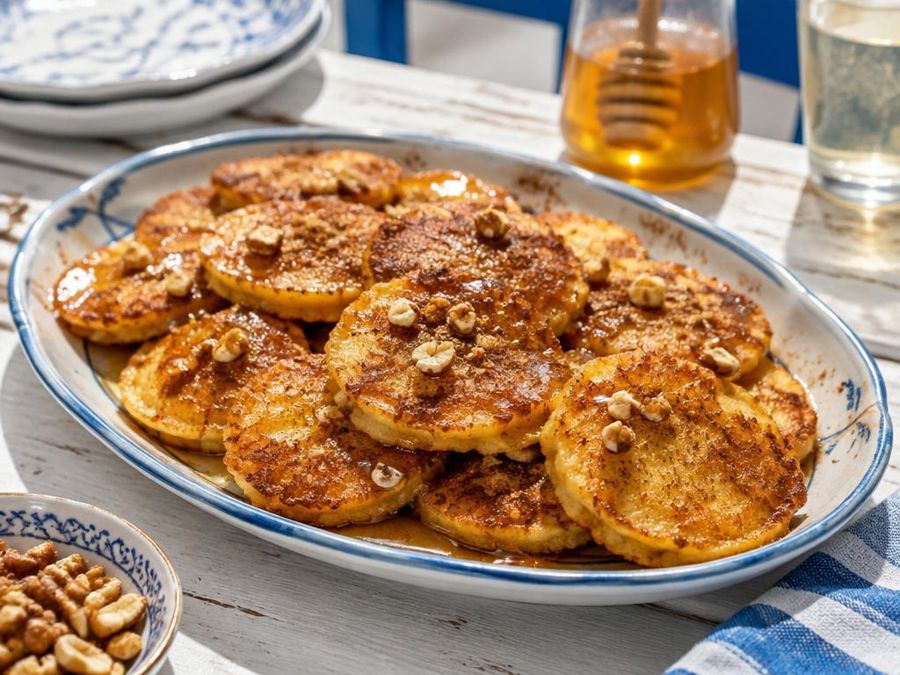
- Arrange the warm tiganites on a platter, drizzle generously with warm honey, and sprinkle with toasted walnuts and cinnamon.
Cook’s notes
- Shimmering oil: the batter should sizzle the instant it lands, or the pancakes drink oil.
- Keep these pancakes small for a higher proportion of crisp edges.
- Warm the honey: it flows thin and soaks into the crisp surface.