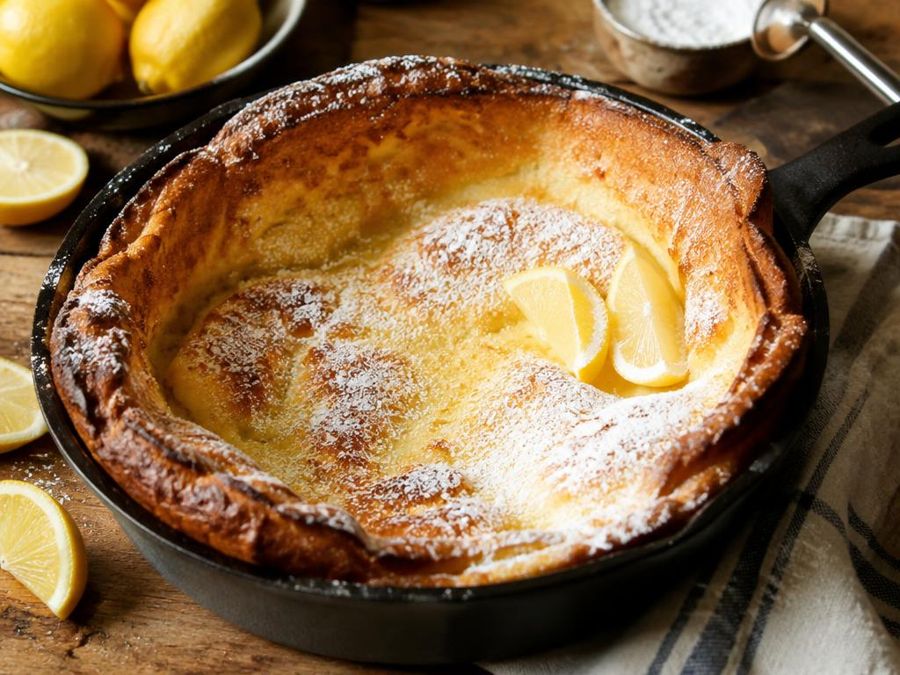
An American skillet pancake with German roots · DUTCH BAY-bee
Prep 5 minBake 20 minSweetOven-Puffed
Servings
Original
Makes 3–4 servings
Ingredients
Tap to check off as you go.
At the table
· Powdered sugar and fresh lemon juice
· Sautéed cinnamon apples
· Mixed berries and crème fraîche
· Hot coffee or a glass of apple cider
Method
Cook’s notes
Room-temperature eggs and milk give the biggest puff.
Don't peek: opening the oven early will make it fall.
Blender shortcut: 20 seconds in a blender makes the smoothest batter.
The story
The Dutch baby is American, despite a name that suggests the Netherlands and an older chapter title that suggested Germany. Seattle’s Manca’s Café is widely credited with popularizing the small oven pancake. Its name is often explained as a playful alteration of Deutsch, meaning German, but the familiar story about a child’s mispronunciation should remain an anecdote rather than a proven event. The German connection helps explain why American menus sometimes call it a German pancake. Yet the café specialty has its own identity: a batter baked in a very hot skillet, with edges that rise dramatically around a softer center. It resembles a popover or Yorkshire pudding more than a conventional griddle stack. Steam and an egg-rich structure drive the rise in a typical scratch-made version. The pancake’s brief spectacle is part of its charm. Once removed from the oven, it naturally settles, leaving crisp folds around a tender center. Lemon juice and powdered sugar are well-known accompaniments; fruit and savory toppings appear in modern variations. Bringing the skillet straight to the table honors what the dish does best: one generous pancake, shared while its edges are still hot and its dramatic shape has not yet fully relaxed.